

Cross-Border Payments in APAC. Same Destinations. Smaller Hops.
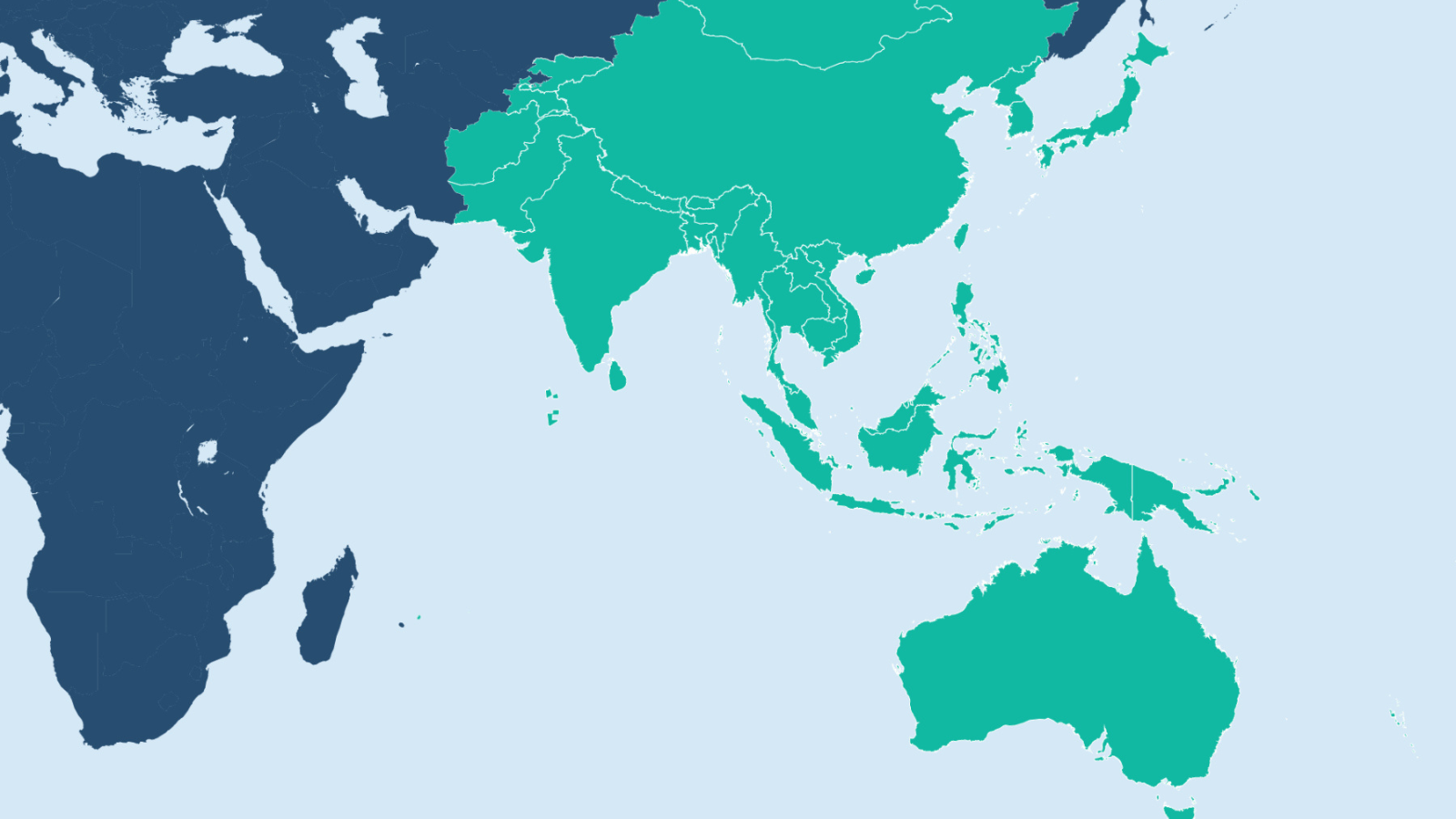
Moving money between countries the traditional way involves convincing a chain of banks to talk to each other. Your local bank probably doesn't have a branch in Cappadocia, so it needs a correspondent bank - which needs another, and so on. Each hop adds time, cost, and complexity. Fees compound. Delays stack. And good luck working out where your money actually is at any given moment.
For businesses paying international teams, or families supporting relatives abroad, these friction points are more than minor inconveniences - they're a structural tax on every transfer.
That's where stablecoins are starting to make a difference, and across Asia-Pacific, they're doing it in a way that most people will never notice.
Digital asset adoption across the region is picking up pace, though perhaps not in the way the headlines usually suggest. The shift is happening one layer below retail, in settlements - the quiet infrastructure that carries value between systems, currencies, platforms and jurisdictions. Stablecoins are beginning to occupy that layer, functioning as programmable liquidity rails inside the existing financial system.
The near-term opportunity is a faster, lower-friction settlement layer operating beneath existing payment networks. One that improves how payments actually clear, without requiring a different consumer experience.
That distinction changes who stablecoins are relevant to and where the real commercial opportunity sits.
The Asia-Pacific region presents a combination of factors that make these developments particularly relevant: high mobile and digital wallet penetration, widespread familiarity with QR-based payments, large remittance corridors, rapid growth in crypto ownership, and cross-border banking infrastructure fragmented across dozens of currencies and clearing systems.
Indonesia, Vietnam, the Philippines, and Thailand consistently rank among the highest globally for crypto adoption. According to Chainalysis, global crypto transaction volume rose 69% year-on-year - from USD $1.4 trillion to $2.36 trillion - with all four countries placing in the global top 20.
But high adoption figures don't tell the whole story. In Indonesia, for example, crypto can't legally function as a payment instrument at all. The rupiah remains the only lawful currency for everyday transactions. People can trade or transfer digital assets - they just won't be tapping their crypto wallet at the checkout any time soon.
What's actually happening is more behind-the-scenes: settlement, treasury flows, cross-border liquidity, B2B value movement. The plumbing is changing, even if the tap looks exactly the same to the person using it. Financial infrastructure has always evolved this way - the settlement layer shifts first, while the consumer experience stays largely intact.
Three markets show how this could potentially play out in practice:
Singapore
In Singapore, StraitsX lets users connect stablecoin balances directly to Visa and Mastercard rails. The user holds stablecoins, the payment goes through standard card infrastructure, conversion happens at the point of sale, and the merchant receives fiat. From the outside, it looks like a normal card payment. Underneath, the settlement path is materially different from anything traditional cross-border flows offered.
Thailand
In Thailand, TouristDigiPay applies the same logic to tourism and QR payments. Inbound tourists spend digital assets, conversion happens in the background, and merchants receive Thai baht. The merchant experience is unchanged. The QR infrastructure is unchanged. What changes is what happens beneath the transaction.
Philippines
In the Philippines, the integration goes further still. QR Ph - the country's national QR payment system - has incorporated stablecoin functionality through platforms including Coins.ph, allowing USDC and USDT to be used at point-of-sale across more than 700,000 merchants nationwide, with merchants continuing to settle in fiat. It's a working demonstration that stablecoin infrastructure can scale within a regulated domestic payment ecosystem without requiring the wholesale replacement of anything that already exists.
Across all three markets, the user experience remains largely unchanged. Merchants continue to settle in local fiat, and familiar payment methods stay in place. The difference sits underneath, where stablecoins function as the liquidity layer that moves value between systems.
That separation between what users see and how value actually moves is becoming the defining feature of this shift.
Traditional international wire transfers typically cost $25–50 per transaction through bank rails, with cross-border fees running 2–3% or higher and settlement windows stretching to T+5 across correspondent chains. Foreign exchange markups add another 2–4% on top - easy to overlook, hard to avoid - and those costs compound at every hop. For businesses making regular international payments, the drag on capital is real.
Modern fintech providers like Wise have improved things considerably, bringing fees down to roughly 0.4–1% and compressing settlement to T+0 or T+2. But even these providers ultimately sit on fiat banking infrastructure, and settlement speed is still constrained by the rails beneath them.
Stablecoin rails change the underlying mechanics. Transaction fees run to fractions of a cent. Settlement finality is measured in seconds. The network runs continuously, independent of banking hours or clearing windows, and, subject to local regulations, anyone with internet access and a digital wallet can receive funds - which matters enormously in markets with limited banking access or thin correspondent relationships. Even accounting for on-ramp and off-ramp conversion costs - typically 0.5–2% each way - total costs for many corridors remain 50–70% lower than traditional wire transfers.
One misconception worth clearing up: unlike traditional cross border payments, stablecoin settlement doesn't take one to three business days. On modern blockchain networks, finality typically takes seconds. Where latency appears is at the edges - converting back into fiat, interacting with banking infrastructure, or accessing local liquidity. The bottleneck is no longer blockchain settlement. It's fiat connectivity. And in more advanced markets, even that gap is compressing toward near real-time.
Three things drive these efficiency gains, and they compound.
The first is the removal of intermediaries. Correspondent banks, clearing houses, foreign exchange desks - each extracts fees and adds reconciliation complexity. With stablecoins, value moves directly between wallets, cutting out much of that chain. Fewer hops means lower fees, but also fewer points of failure and less operational overhead at every stage.
The second is reduced complexity for treasury operations. For businesses managing cross-border payments across multiple jurisdictions, stablecoin settlement simplifies FX coordination, reduces settlement breaks, and compresses reconciliation cycles. Several infrastructure providers, including Stripe, Wise, Polygon and Crossmint, point to operational overhead - not just transaction fees - as a major cost in cross-border payments. Reducing that overhead compounds with every payment, every month.
The third is programmability - and this is the most consequential shift of the three. Legacy settlement rails weren't designed for automated logic, conditional payments, or embedded financial workflows. Stablecoin infrastructure is. The ability to trigger payments automatically when conditions are met, to embed liquidity movement into platform logic, to run treasury flows without manual intervention - that's not an incremental improvement over what came before. It's a different capability altogether, and it becomes more valuable the more that financial infrastructure moves toward software.
APAC has the conditions for hybrid financial infrastructure to take hold: rapid digital adoption, fragmented cross-border systems, mobile-first behaviour, growing familiarity with digital assets. The trajectory is becoming clear. Retail payments will mostly remain on fiat rails. Stablecoins move in underneath, concentrated in treasury, B2B, and platform-based flows.
Australia sits in a structurally different position to much of Southeast Asia - highly developed banking infrastructure, sophisticated domestic payment systems, strong regulatory frameworks, deep institutional trust in fiat currency. But even mature financial systems face structural constraints.
Traditional settlement infrastructure was designed around banking hours, correspondent relationships, and jurisdiction-specific clearing windows. Capital increasingly doesn't move on those timelines. As financial infrastructure becomes more software-driven and globally connected, the demand for continuous liquidity, programmable settlement, and faster cross-border value movement continues to grow regardless.
Stablecoins become relevant here as a complementary settlement layer, operating alongside banks and domestic currency rather than against them.
The Hopportunity
Domestic currencies remain dominant. Banks remain important. Payment interfaces remain familiar. But the settlement infrastructure beneath them is becoming progressively more continuous, programmable and cross border.
AUDM is Macropod's contribution to that infrastructure. An AUD-denominated digital payment instrument built for on-chain settlement, treasury and platform liquidity flows, and cross-border value movement within a regulated framework. The next generation of cross-border rails is being built across the region. AUDM is how AUD gets on them.
MEET THE AUTORS


© 2026 Macropod Global - ALL RIGHTS RESERVED